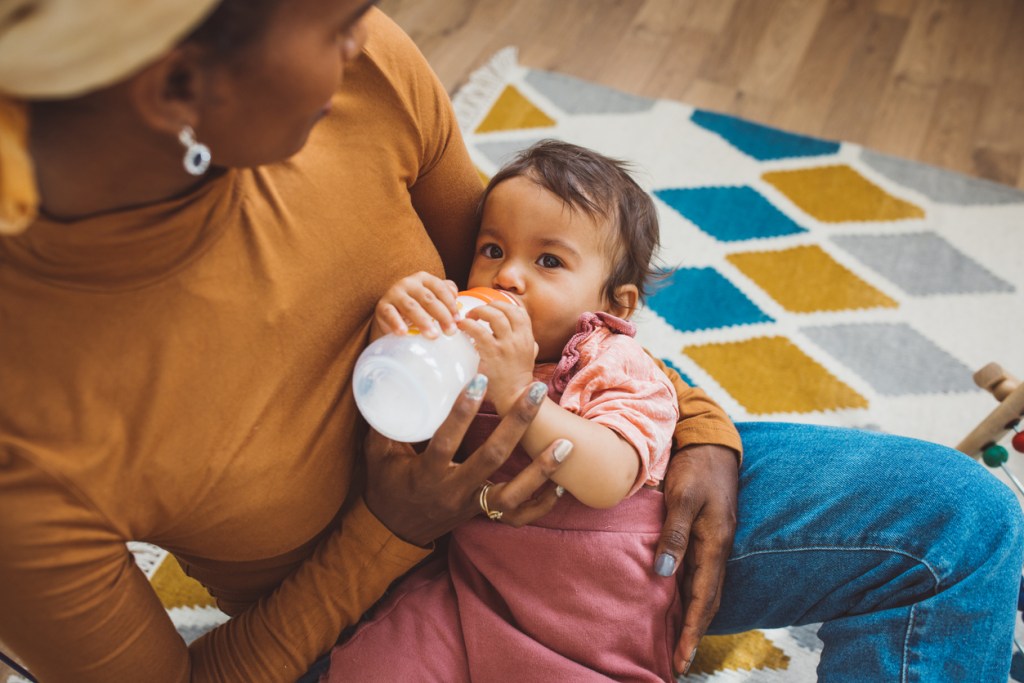
There are many reasons it may be important to you that your breastfed baby be able to take a bottle, but did you know it might not be that simple? Some babies have trouble transitioning between breastfeeding and bottle feeding. To help encourage your baby to be flexible with feeding methods, here are some tips to help get you started.
Why to Introduce a Bottle
Before you begin, think about why you need to introduce a bottle. Not all breastfed babies need to feed from a bottle. Introduce a bottle only if you expect to be separated from your baby for long periods of time, such as returning to work outside the home.
Carefully consider whether simply “sharing feeding responsibilities” with another caregiver is an appropriate reason for your family to introduce a bottle. Preparing and cleaning bottles is a lot of extra effort for your household, and separating milk removal and feeding into two separate activities can be even more overwhelming. Breastfeeding can be challenging in the beginning, but it should get much easier very quickly, whereas bottle feeding adds a lot of extra work to your plate for entire first year of your baby’s life.
If your baby’s medical provider has recommended supplementation by bottle at any time, please reach out to a qualified lactation consultant immediately for support.
When to Begin Offering a Bottle
The ideal time to begin offering a bottle to a full-term, healthy newborn is when they are around 3-4 weeks old. By this time, breastfeeding is well-enough established that bottle feeding (with correct technique) is not likely to disrupt breastfeeding. After about 2 months of age, the baby begins to lose its sucking reflex, which will make bottle feeding much more difficult to learn.
Choosing the Best Bottle
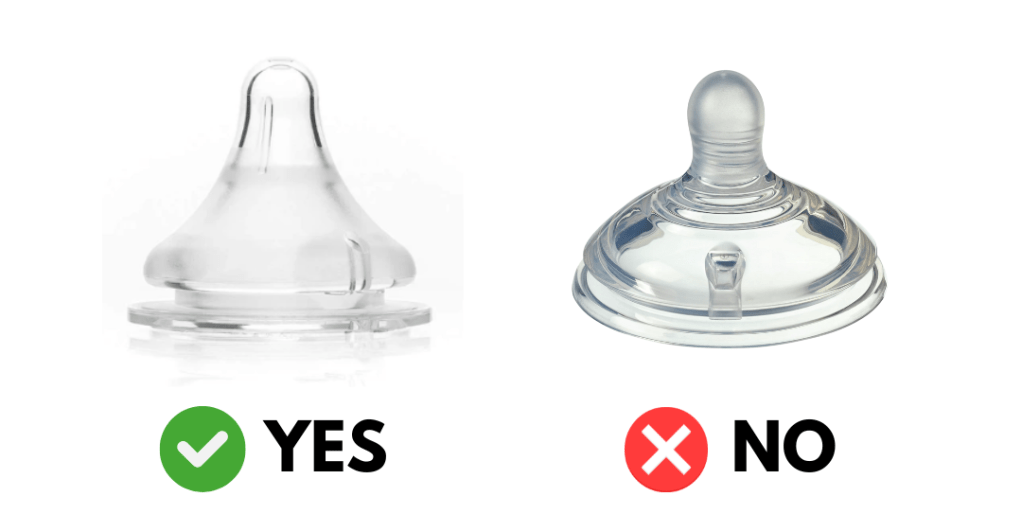
The best bottle for a healthy breastfed baby:
- Has a gradual, tapered shape to encourage a wide latch
- Has a slow-flow teat (even for older babies)
What to Put in the Bottle
In order of preference, offer:
- The parent’s own, fresh, expressed breastmilk
- The parent’s own reheated breastmilk
- Donor milk from a certified milk bank
- Safely prepared artificial baby milk (formula)
For information about how to express your breastmilk, see my blog post about pumping.
Correct Bottle Feeding Technique
To prevent your baby from developing a flow preference for the bottle over breastfeeding, it’s important to introduce bottle feeding with the correct technique:
- Recognize hunger cues (tight fists, raised arms, rooting) and feed baby on demand
- Utilize a paced bottle feeding technique which mimics the flow of breastfeeding as demonstrated in this video
- Offer an appropriate volume of milk for the baby’s age and weight, usually no more than 2-3oz per feed at first
- Every time you offer a bottle, you’ll need to protect your milk supply by pumping both breasts with a good-quality electric breast pump to remind your body that baby has a had a feeding
- Offer the bottle every day or two as part of your routine to make sure the baby gets used to it
How to Begin
Now that you have all the tips, you’re ready to get started!
Day 1
The day before you plan to offer a bottle for the first time, you’ll want to prepare the bottle you’ll be using as well as your pump parts by cleaning and sterilizing everything.
Day 2
About 30 minutes to an hour after the first feeding of the day (think sometime between 7-9am), take 15 minutes to pump. Whatever milk you collect can be used for baby’s first bottle. It’s okay if you don’t collect much for the first bottle since this pumping session was not in place of a nursing session.
That evening, choose one feeding (around bedtime usually works well) to offer the bottle first. Have another caregiver offer it using the paced technique mentioned above while you pump to replace the feeding. The milk you collect this time will be the next bottle.
If the volume in the bottle was not enough for a full feeding and the baby still seems hungry, finish the feeding by breastfeeding.
Day 3
The next day, offer the milk you pumped on day 2 in the bottle the same way. You should see the volume you pump begin to increase over time, but don’t worry if the volume still seems small. This is all just for practice!
If you run into any questions in your preparation, you’re worried it might be too late to introduce a bottle, or your baby doesn’t seem to be getting the hang of it, please reach out to me for help.
Resources
Safe breastmilk storage guidelines
Human Milk Banks of North America (HMBANA)
Mother’s Milk Bank of the Western Great Lakes (my local milk bank)
 Maya Lott, IBCLC
Leave a comment