When your baby is breastfed, you may worry that you need a freezer full of backup milk. Adding to your stress is the bombardment with content on social media showing full-size freezers full of breastmilk. But building a freezer stash is hard work: hours of pumping, cleaning pump parts and bottles, taking up valuable space in your fridge and freezer, and more! Before you dive in on building your stash, let’s take a look at some of the biggest questions around the milk we store.
- How much do I need in my freezer stash?
- When/how should I start building my freezer stash?
- What supplies do I need?
- How do I store milk in my freezer?
And the most important question: Do I need a freezer stash at all?
Why do I need a freezer stash?
First, be honest with yourself about why you think you need a freezer stash. The short answer is that most families do not need a freezer stash at all.
In case of emergency
Yes, it would make you feel more confident to know your baby’s nutritional needs will be met in case of emergency. At any stage, you may be separated from your baby due to a medical or family emergency. Having enough breastmilk on hand to last your baby about 24 hours is not necessarily a bad idea, especially if it gives you peace of mind. But remember, other types of emergencies like inclement weather or power outages can cause you just as much stress if you’re worried about something happening to your precious stash. And nursing your baby is always the best way to feed in an emergency.
For returning to work
If you are returning to work away from your baby and want to continue to breastfeed, you will need to provide breast milk while you are away. But you might not need as much as you think. Keep in mind that you will be pumping while you’re separated, so you will only need to store enough milk for that first day or two. The milk you pump while separated on the first day should be just the right amount to feed the baby on the second day – and the nutritional value of that never-frozen milk is actually a little bit better!
How much do I need?
The short answer is, less than you think. The rule of thumb is about 1oz per hour you expect to be separated from your baby. For most families, 24-32oz (enough for 3 days of daycare or 24 hours apart) in the freezer is plenty.
When should I start pumping?
If possible, wait until your baby is at least 6 weeks old for your supply to regulate before pumping any extra milk, even if you’re already pumping for another reason. Pumping before 6 weeks can cause your supply to get out of sync from your babies feeding patterns and lead to problems like engorgement and mastitis. It’s best to let your body match your baby’s needs in the early weeks.
For going back to work, begin pumping about 4 weeks before your start date. Adding in just one pumping session per day between nursing sessions should help you collect enough milk before you begin working without causing oversupply. I usually recommend after the first feeding of the morning as the best time to introduce this pumping session.
What supplies do I need?
Before you start building your freezer stash, here are the supplies you should be prepared with:
- A good quality pump
- A pumping bra so you can pump both breasts at once, hands-free
- At least one bottle or clean measuring cup with clear lines on it to measure your breastmilk
- Breastmilk storage bags
- Freezer space to freeze milk flat and store your stash
How do I store milk in my freezer?
Now that you’re jumping into the world of storing breastmilk, consider these tips for getting started:
- Store about 3 or 4oz per bag, about as much as your baby will need per feeding
- It is safe to pool milk from multiple pumping sessions, but remember to mix it thoroughly so you preserve the proportion of nutrients in the milk
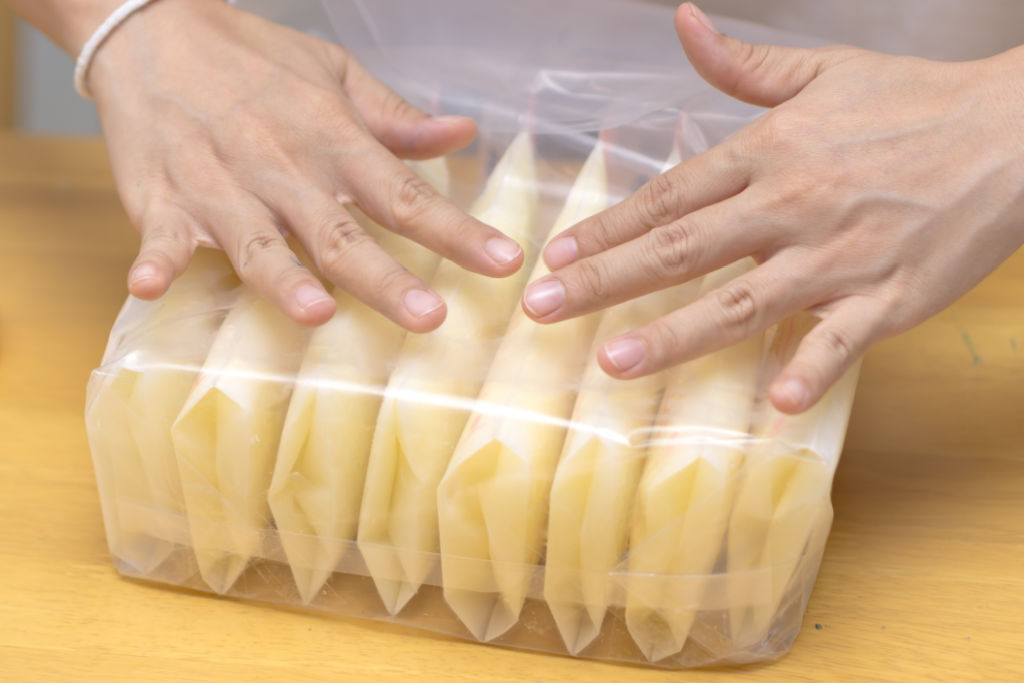
- Lay your breastmilk storage bags flat to freeze and pack them in bricks using gallon-sized freezer bags
- When using milk, utilize a first-in-first-out system so your baby is taking the oldest milk first
- Follow the CDC’s safe milk storage guidelines for all your milk storage and preparation
Summary
Storing breastmilk in a freezer stash can be almost as stressful as not having a backup at all. Here’s the most important thing to remember when you begin building your stash:
Feed the baby, not the freezer.
It seems obvious when you read it, but in an overwhelming moment, you won’t believe what obvious things will slip your mind. There is no reason to introduce formula to your baby now so that you can pump and keep breast milk in the freezer. The can of formula will always be there; feed the breastmilk now. And for goodness’ sake, do not avoid or delay feeding your baby to pump for the freezer. Feed the baby first.
 Maya Lott, IBCLC
Leave a comment